
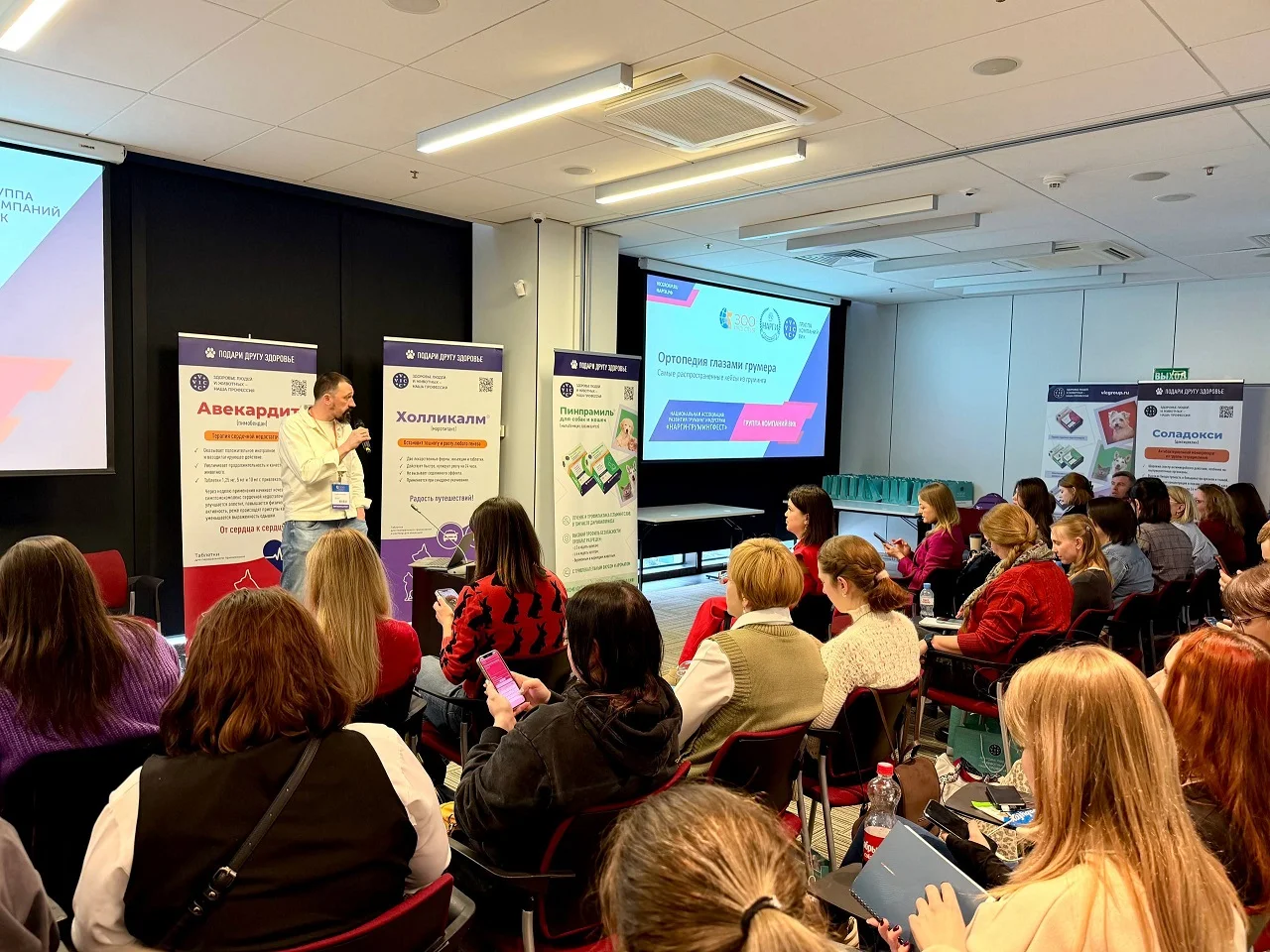
At a specialized conference, experts in dermatology, orthopedics, and dentistry discussed the key risks involved in pet grooming salons, the growing number of conflicts with pet owners, and practical measures to improve the safety of procedures for animals.
The central message of all presentations and discussions was that groomers and veterinarians must work as one team, following clear intake procedures, client referral pathways, and established treatment protocols.
In the dermatology session, speakers emphasized that skin injuries during grooming and dermatitis following procedures are often caused by the animal’s pre-existing condition and behavior rather than by a groomer’s mistake. In practice, this means that risk assessment should begin before the procedure, and any warning signs should prompt a recommendation for the client to visit a veterinarian.
It was also noted that both groomers and veterinarians are increasingly facing consumer abuse: complaints are made even when there is no causal link between the procedure and the alleged outcome.
The event discussed the groomer’s role as a connecting link between breeders, owners, pet product manufacturers, and veterinary professionals. Competent grooming can help identify health issues in time and refer an animal to a veterinarian. Recommendations on home care, the optimal frequency of grooming procedures, acclimation, and socialization directly affect a pet’s quality of life.
During the discussion on salon disinfection, participants reviewed sanitation practices. If ringworm is detected, recommended measures include using a fumigation disinfectant, steam-treating instruments, and UV disinfecting the grooming room for 15 minutes at the end of the day.
The orthopedic session focused on injuries in grooming salons and related court practice. It was noted that clients do take cases to court, and courts often rule in favor of owners even if they have no documents proving ownership of the animal. At the same time, improperly documented materials may be accepted as evidence, while a standard service agreement does not provide groomers with sufficient legal protection.
The most vulnerable areas identified by the experts included the hind limbs of Maine Coon cats and the joints of small-breed dogs.
Experts stressed that lameness does not occur without a reason: it is usually associated with injury or an underlying chronic condition. Causes can vary widely, ranging from joint diseases to vascular and neurological disorders, infections, and congenital abnormalities. Problems with claws were also identified as a common cause of lameness.
Groomers were advised to assess an animal’s condition during intake, paying attention to how it sits, stands, and walks.
The speakers also listed common orthopedic diagnoses that should be considered risk factors, including medial patellar luxation and cranial cruciate ligament rupture.
The discussion also highlighted the need for annual preventive veterinary check-ups for every animal as the basis for understanding its actual health status and preventing injuries. For highly anxious or excitable animals, a sedative should be recommended in consultation with a veterinarian.
The dental session highlighted the high prevalence of oral health problems in miniature breeds. Causes include insufficient natural tooth cleaning, dietary factors, and a mismatch between tooth size and jaw size.
The most common condition is periodontitis, which is always associated with chronic pain. However, the severity of periodontitis can only be determined through an examination by a veterinary dentist. An annual dental check-up is recommended. Experts specifically emphasized that diseased teeth are non-functional and often need to be removed.
Conference participants noted the need for systematic work with pet owners: explaining the stages of tooth replacement, the importance of timely removal of retained deciduous teeth, and the rules for choosing toys and treats. Tooth brushing in a grooming salon is acceptable only as a hygienic procedure. Whenever there is doubt or a potentially controversial issue, the procedure should not be performed, and the animal should be referred to a veterinarian. In this regard, participants highlighted the need to develop formal protocols for tooth cleaning in pet grooming salons.
The participants agreed on the key point: grooming safety is ensured not by one-off measures, but by a comprehensive system. Such a system includes clear intake procedures and documentation of the animal’s condition before treatment, timely referral to a veterinarian when risk factors are identified, regular preventive check-ups, updated sanitation protocols in salons, standards for permitted procedures—including dental hygiene—and professional cooperation between the owner, groomer, and veterinarian.